
The Parting Glass
"The Parting Glass" is a Scottish traditional song, often sung at the end of a gathering of friends. It has also long been popular in Ireland, and modern versions reflect strong Irish and North American influences. It was the most popular parting song sung in Scotland before Robert Burns wrote "Auld Lang Syne".
This is a scene from O'Donoghue's Opera, a mock opera made in 1965 with The Dubliners, where vocalist Ronnie Drew sings a verse of The Parting Glass before being hanged from the gallows.
Of all the money that e'er I had
I spent it in good company
And all the harm I've ever done
Alas it was to none but me
And all I've done for want of wit
To mem'ry now I can't recall
So fill to me the parting glass
Good night and joy be to you all
So fill to me the parting glass
And drink a health whate'er befall,
And gently rise and softly call
Good night and joy be to you all
Of all the comrades that e'er I had
They're sorry for my going away
And all the sweethearts that e'er I had
They'd wish me one more day to stay
But since it falls unto my lot
That I should rise and you should not
I gently rise and softly call
Good night and joy be to you all
If I had money enough to spend
And leisure time to sit awhile
There is a fair maid in this town
That sorely has my heart beguiled.
Her rosy cheeks and ruby lips
I own she has my heart in thrall
Then fill to me the parting glass
Good night and joy be with you all.
A man may drink and not be drunk
A man may fight and not be slain
A man may court a pretty girl
And perhaps be welcomed back again
But since it has so ought to be
By a time to rise and a time to fall
Come fill to me the parting glass
Good night and joy be with you all
Good night and joy be with you all
The Mythology of The Selkie
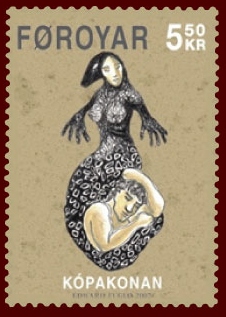
"The boundaries between death and life, love and tragedy, hope and despair, are often far more permeable than we image. And in Irish mythology, these boundaries are central to the narratives which have been passed down through centuries of storytelling. And no more so, than for the Selkies: creatures carrying the souls of drowned sailors; shedding their animal skin to become human and live on land; forced to choose between lives of captivity with their children or escape alone to the sea. The Selkies – living between land and sea – pass between life and death. Their love for life exists in tension with the life they love. They are the embodiment of much we struggle to express.
It’s no wonder, then, that the Selkies have inspired generations of folktales spanning multiple cultures and beliefs. This post considers who they were and the stories that surround them. It discusses their significance and symbolism, their Celtic roots, comparisons with wider mythological traditions, and archaeological evidence. Hopefully they will inspire you as they have done countless generations before, as symbols of the paradoxes of life.
This links to other Irish mythical creatures I’ve covered including the Cailleach and the Merrow.
The word selkie derives from the Scots term selchie/silkie, literally “seal” – a usage recorded in Orkney and Shetland dialect glossaries of the mid-1800s. Irish storytellers often call the same beings maighdean mhara (“sea-maid”) or, in Ulster Scots pockets of Donegal, simply “seal-woman”. While Orkney ballads situate the dramas on islets like Sule Skerry, collectors in Galway and Clare repeat virtually identical plots, underscoring the motif’s migration along the North Atlantic region.
At the heart lies the “stolen skin” tale. A fisherman surprises seals dancing in human form under the moon, snatches one skin and refuses to return it unless the woman becomes his wife; she bears children but eventually recovers the hidden pelt and escapes, sometimes leaving a sorrowful message etched on a sea-rock.2 Variants reverse the genders or add tragic elements – for instance, in the Child-ballad “The Grey Selkie of Sule Skerry”, the seal-father prophesies his own harpooning by the woman’s future husband.3 In Ireland, the descendants of silkes were said to be prohibited then from hunting seals. But to understand the selkies, we must understand how these communities viewed seals themselves."
-Daniel Kirkpatrick